
Justice Ashwani Kumar Mishra was sworn in as the Chief Justice of the Punjab and Haryana High Court, despite strong objections from the Punjab government. The Mann government claimed the appointment bypassed constitutional norms and procedures, leading to a political tussle with the Centre, which defended the process.

Chief Justice of India Surya Kant urged national law universities to proactively lead the integration of technology into the legal system, rather than merely reacting to changes. Speaking at a conclave, he stressed the importance of incorporating academic integrity and responsible AI use into the curriculum, rejecting outright bans on generative AI. The CJI highlighted that law schools must prepare graduates to critically engage with technological tools, ensuring justice, fairness, and human judgment remain central to the evolving legal landscape.
Chief Justice of India Surya Kant highlighted the rapid integration of Artificial Intelligence into arbitration practices, expressing concerns about its accuracy, authenticity, and ethical use. He stressed the need for mandatory disclosure when generative AI is used in preparing legal documents and reports, advocating for shared standards to manage deepfakes and AI-generated material. The CJI also encouraged embracing AI for efficiency in tasks like e-discovery while preserving core arbitration principles.

He will hold the office till February 9, 2027.

Justice Surya Kant, who was elevated as a judge of the Supreme Court on May 24, 2019, would have a tenure of over 1.2 years as the CJI. He is due to retire on February 9, 2027.

Former Supreme Court judge Justice Rohinton Fali Nariman has voiced serious concerns regarding the Election Commission's functioning, stating that the right to vote is 'at great peril'. He called for the Supreme Court's intervention to address 'disturbing developments' within the poll panel, particularly citing issues like voter disenfranchisement during electoral roll revisions and the controversial appointment process of Election Commissioners.

Chief Justice of India Surya Kant asserted that the judiciary cannot be browbeaten, during a hearing on a plea against a political march to the Supreme Court by Rahul Gandhi and other opposition leaders on October 12. The plea alleges an attempt to obstruct the judicial system and seeks a ban on political demonstrations within court premises. The court has issued notices to the leaders and ordered the preservation of CCTV footage from the incident.

The Congress' Seva Dal organised a candle march in New Delhi, demanding justice for Ankita Bhandari, who was murdered in Uttarakhand in 2022. The protest called for an impartial investigation and accountability, especially regarding allegations against BJP's Dushyant Gautam, whose recent appointment as Sikkim Governor has drawn criticism from the Congress.

Chief Justice of India (CJI) Justice Surya Kant has rejected the INDIA bloc leaders' request for a meeting to submit a representation over alleged electoral irregularities, stating that they should approach the court by filing a petition as the matter is already sub judice.

Chief Justice of India Surya Kant declined a meeting request from opposition leaders Rahul Gandhi and Mallikarjun Kharge, stating that discussing sub judice matters would violate judicial ethics and the principle of Separation of Powers. He advised them to file a formal petition with the Supreme Court instead of seeking an administrative meeting. The opposition had sought to discuss issues including the Chief Election Commissioner, arrests, and public transport disruptions.

Actor Imran Khan, a US national and OCI cardholder, plans to challenge a Mumbai police notice in the Bombay High Court. The notice, issued after his participation in a protest against the Chief Election Commissioner, demands he leave India by October 28 for allegedly violating immigration laws. Khan's petition argues that no law prohibits OCI cardholders from protesting.

Rahul Gandhi has convened a high tea for INDIA bloc MPs to discuss a strategy for joint protests against alleged "vote theft" and to demand the resignation of Chief Election Commissioner Gyanesh Kumar. This meeting follows a "March for Democracy" by opposition leaders and activists to the Supreme Court, where they filed a petition challenging alleged poll irregularities.

AICC general secretary K C Venugopal announced that the INDIA bloc will stage a major protest in Delhi on Monday to protect voting rights, following meetings with the President and a planned meeting with the Chief Justice of India. He accused PM Modi and Amit Shah of attempting to protect Chief Election Commissioner Gyanesh Kumar and criticised the Centre for denying an AIIMS facility to Keralam despite past assurances. Venugopal affirmed the bloc's commitment to ensuring free and fair elections and expressed hope for AIIMS if they come to power.

The Supreme Court has agreed to examine a plea seeking the recall of its recent split verdict regarding the 2023 law on the appointment of the Chief Election Commissioner and Election Commissioners. This law notably excludes the Chief Justice of India from the selection panel, a change from a previous Supreme Court directive.

The official Congress Keralam 'X' account posted a controversial message against CJI Surya Kant, which quickly went viral before being deleted. The party subsequently removed the individual responsible, with KPCC president Sunny Joseph stating the post was unauthorised and did not reflect the party's stance on judicial impartiality. Union Minister Kiren Rijiju criticised Congress over the incident.

The Tata Institute of Social Sciences (TISS) has announced Dr C S Pramesh, director of Tata Memorial Hospital, as the new chief guest for its 86th Convocation on August 22, replacing Chief Justice of India Justice Surya Kant, who was unavailable due to a full calendar.

Shiv Sena (UBT) leader Sanjay Raut stated on Friday that he is prepared to apologise to the Supreme Court if his remarks were deemed inappropriate, emphasising his party's respect for the judiciary. His comments followed observations by Chief Justice of India Surya Kant regarding attempts to browbeat the judiciary. Raut also linked his apology to demands for justice concerning alleged electoral roll irregularities and the delayed hearing on the Shiv Sena name and symbol dispute.

Opposition MPs from the INDIA bloc, including prominent leaders like Rahul Gandhi and Priyanka Gandhi Vadra, marched to the Supreme Court to file a petition against Chief Election Commissioner Gyanesh Kumar, alleging 'vote chori' and irregularities in electoral rolls.

The Supreme Court has directed the Allahabad High Court chief justice to promptly address allegations against the presiding officer of the 2021 Lakhimpur Kheri violence case, who is accused of transferring cases to himself and acquitting defendants. The apex court also urged the Uttar Pradesh government to appoint a new public prosecutor for the high-profile trial.

Chief Justice of India Surya Kant has stated that the ongoing protests against Chief Election Commissioner Gyanesh Kumar and the associated restrictions in Delhi fall under law and order, not his judicial purview, and declined to meet opposition leaders regarding the issue.

The Supreme Court of India has sought proposals for establishing a permanent financial corpus to support patients suffering from Spinal Muscular Atrophy (SMA), a rare genetic disorder requiring expensive treatment. This initiative follows an earlier case involving comedian Samay Raina, which led the court to examine broader systemic concerns for SMA patients.

Chief Justice of India Surya Kant affirmed the judiciary's commitment to protecting students' right to peaceful protest during an interaction at CNLU Patna. He also addressed concerns about collegium transparency, stating that disclosure of dissenting opinions could compromise individual dignity. The CJI also praised a proposal to shorten the law degree duration.

Major opposition leaders, including Rahul Gandhi and Mallikarjun Kharge, have filed a petition in the Supreme Court challenging alleged large-scale voter deletions and irregularities in the Special Intensive Revision (SIR) of electoral rolls. This action follows a "March for Democracy" and a declined request to meet the Chief Justice of India regarding "vote chori" allegations.

Bollywood actor Imran Khan has launched a legal challenge in the Bombay high court against a police notice ordering him to leave India by October 28, following his participation in a political protest and a concurrent review of his OCI status.

The Centre is reportedly considering moving forward with the impeachment process against Justice Yashwant Varma in the upcoming Winter session of Parliament, despite his resignation. A Lok Sabha Speaker-constituted panel has found him guilty of possessing unaccounted cash and disturbing evidence.
The Students and Alumni of the National Law School of India University (NLSIU) in Bengaluru have opposed Chief Justice of India Surya Kant and Bar Council of India chairman Manan Kumar Mishra attending the upcoming convocation of the varsity.
The Supreme Court clarified on Monday that it had not adjudicated on the new Form 6, used for inclusion in electoral rolls, during its hearing on the Special Intensive Revision (SIR) of electoral rolls in Bihar. This clarification comes after the Election Commission's press release suggested the apex court had upheld the Form 6 declaration.

Students at NALSAR University of Law have written to the university administration, opposing the proposal to invite the Chief Justice of India as the chief guest for their convocation. Their objection stems from the CJI-led Supreme Court bench's refusal to urgently list a plea concerning alleged police brutality during a 'Chalo Sansad' protest, which students feel contradicts the university's values.

The INDIA bloc, comprising 17 opposition parties and civil society members, met at Rahul Gandhi's residence to strategize against alleged "vote chori" and the denotification of Jantar Mantar as a protest site. Leaders, including Rahul Gandhi, Mallikarjun Kharge, and Tejashwi Yadav, vowed to continue their united political and people's resistance, demanding the resignation of Chief Election Commissioner Gyanesh Kumar and asserting that those responsible for undermining democracy would be held accountable.
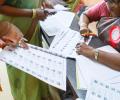
Former RBI Governor Bimal Jalan, ex-IAF Chief NAK Browne, and other prominent figures in Delhi have received notices regarding discrepancies in their voter details during the ongoing Special Summary Revision (SIR) of the electoral rolls. Over 33 lakh electors have been identified for such notices, with a deadline of September 30 for responses.

The report of a three-member committee investigating the grounds for the removal of High Court judge Yashwant Varma, following the discovery of burnt currency notes at his residence, will be tabled in the Lok Sabha during the upcoming Monsoon session.

Supreme Court Justice Sandeep Mehta has sent a fourth letter to CJI Surya Kant, reiterating and expanding allegations against Rajasthan High Court judge Sanjeev Prakash Sharma, accusing him of judicial interference, breaching confidentiality, and administrative abuse, further deepening a significant judicial controversy.
A curative petition has been filed in the Supreme Court challenging the September 23 split verdict on the Chief Election Commissioner and Other Election Commissioners (Appointment, Conditions of Service and Term of Office) Act, 2023. The petition, filed by Jaya Thakur, alleges a "reasonable apprehension of bias" due to claims that Justice Satish Chandra Sharma's son is a standing counsel for the Election Commission, raising questions about judicial propriety.

Tata Sons has provided Tata Trusts with three legal opinions, including those from former Supreme Court judges BN Srikrishna and UU Lalit, to assert the validity of N Chandrasekaran's reappointment as chairman for another five years, following queries from Tata Trusts regarding the September 17 board meeting resolution.

The Supreme Court expressed concern over the closure of 57 Metro stations and cancellation of trains in Delhi ahead of protests, stating the Centre 'cannot use a hammer to kill a fly' and ordered against complete prohibition of transport services.

Chief Justice of India Surya Kant has stated that allegations of "maladministration" and "favouritism" made by Supreme Court judge Justice Sandeep Mehta against Acting Chief Justice of Rajasthan High Court Sanjeev Prakash Sharma cannot be adjudicated in the public domain, emphasising that Justice Sharma must be given a fair opportunity to respond.
A Supreme Court bench of Justices Dipankar Datta and Satish Chandra Sharma has given split opinions on whether pleas challenging the 2023 law for appointing the Chief Election Commissioner and Election Commissioners should be referred to a larger Constitution bench, citing a difference in views on the law's constitutional validity and the executive's role in selections.

The Supreme Court has sought responses from the Election Commission and Chief Election Commissioner Gyanesh Kumar regarding a plea filed by Congress leader Rahul Gandhi and 12 other opposition leaders concerning alleged large-scale voter deletions and Special Intensive Revision (SIR) irregularities.
The Supreme Court has agreed to hear an application alleging that Congress leader Rahul Gandhi pushed a pregnant journalist during a march to the apex court on October 12. The matter was mentioned by senior advocate Gaurav Bhatia, who stated the journalist was three months pregnant and required hospitalisation. The court will hear the application on October 26 or October 27, alongside other pleas related to the October 12 march and electoral roll irregularities.
The Joint Parliamentary Committee (JPC) on simultaneous elections had scheduled an "informal interaction" with Supreme Court judges, which was later cancelled by the apex court. The Supreme Court deemed the meeting inappropriate as the proposed constitutional amendment could become subject to judicial review. JPC Chairman PP Chaudhary defended the panel's initial decision, citing precedents, while DMK MP P Wilson, who mooted the idea, expressed disappointment and argued against the notion that such interactions violate separation of powers.
